Over the last two centuries, prominent Americans have described the United
States as an "empire of liberty," a "shining city on a hill," the "last best
hope of Earth," the "leader of the free world," and the "indispensable
nation." These enduring tropes explain why all presidential candidates feel
compelled to offer ritualistic paeans to America's greatness and why
President Barack Obama landed in hot water -- most recently, from Mitt
Romney -- for saying that while he believed in "American exceptionalism," it
was no different from "British exceptionalism," "Greek exceptionalism," or
any other country's brand of patriotic chest-thumping.
Most statements of "American exceptionalism" presume that America's values,
political system, and history are unique and worthy of universal admiration.
They also imply that the United States is both destined and entitled to play
a distinct and positive role on the world stage.
The only thing wrong with this self-congratulatory portrait of America's
global role is that it is mostly a myth. Although the United States
possesses certain unique qualities -- from high levels of religiosity to a
political culture that privileges individual freedom -- the conduct of U.S.
foreign policy has been determined primarily by its relative power and by
the inherently competitive nature of international politics. By focusing on
their supposedly exceptional qualities, Americans blind themselves to the
ways that they are a lot like everyone else.
This unchallenged faith in American exceptionalism makes it harder for
Americans to understand why others are less enthusiastic about U.S.
dominance, often alarmed by U.S. policies, and frequently irritated by what
they see as U.S. hypocrisy, whether the subject is possession of nuclear
weapons, conformity with international law, or America's tendency to condemn
the conduct of others while ignoring its own failings. Ironically, U.S.
foreign policy would probably be more effective if Americans were less
convinced of their own unique virtues and less eager to proclaim them.
What we need, in short, is a more realistic and critical assessment of
America's true character and contributions. In that spirit, I offer here the
Top 5 Myths about American Exceptionalism. . . .
WAR IS A RACKET: Excerpt from
a speech delivered in 1933 by General Smedley Darlington Butler, USMC.
General Butler was the recipient of two Congressional Medals of Honor -- the highest
military decoration presented by the United States.
[American Exceptionalism should restore individual liberty as the center of
the Constitution's universe and transparency the lifeblood of self-government. It should
understand that the final end of the state is to make citizens free to develop their
faculties and to be morally accountable for their destinies, not to bestride the world
like a colossus or to make the people government wards. It should make the rule of law
king, accept risk as the oxygen of freedom, and repudiate arrogance in favor of
self-doubting.--Bruce Fein, "American
Exceptionalism Challenged," huffingtonpost.com, September 18, 2013]
[Our western partners, led by the United States of America, prefer not to be guided by
international law in their practical policies, but by the rule of the gun. They have
come to believe in their exclusivity and exceptionalism, that they can decide the
destinies of the world, that only they can ever be right. They act as they please: here
and there, they use force against sovereign states, building coalitions based on the
principle "If you are not with us, you are against us." To make this aggression look
legitimate, they force the necessary resolutions from international organisations, and
if for some reason this does not work, they simply ignore the UN Security Council and
the UN overall.--"Address by President of
the Russian Federation," kremlin.ru, March 18, 2014]
[The Declaration of Independence explained that individual liberty was the center of our
constitutional universe; and, that the United States was formed to protect the
unalienable rights of citizens to life, liberty, and the pursuit of happiness--Bruce Fein, "Ignoring America's true greatness,"
washingtontimes.com, February 3, 2015]
[Until we overhaul our foreign policy and stop invading other countries, changing their
regimes, occupying, torturing and indefinitely detaining their people, and uncritically
supporting other countries that illegally occupy other peoples' lands, we will never be
safe from terrorism.--Marjorie Cohn, "
Obama the Outlaw," counterpunch.org, April 28, 2015]
["after seeing working-class Italians with two months paid vacation, Finnish schools
with no homework and the world's best test scores, Slovenians going to college for free,
and women seizing unprecedented power in Tunisia and Iceland--you may realize that the
entire movie is about how other countries have dismantled the prisons in which Americans
live: prison-like schools and workplaces, debtor's prisons in order to pay for college,
prisons of social roles for women, and the mental prison of refusing to face our own
history."--Lauren McCauley, "Michael Moore Says His
New Movie Will Change America," truth-out.org, February 11, 2016]
[What, then, made America truly exceptional, from the start? It was a country founded
not on race, ethnicity or religion but on ideas. And, crucially, those ideas were open
to all. This openness to people, ideas, cultures and religions resulted in the creation
of a new person - the American.--Fareed Zakaria, "Yes, America is being
changed -- but by whom," washingtonpost.com, February 11, 2016]
[US is "exceptional" only in the unbridled violence it applies to others who get in its
way--Paul Craig Roberts, "The Evil Empire has the World in a Death Grip," counterpunch.org,
February 23, 2016]
Hillary Clinton on American Exceptionalism, RT.com May 5, 2016
[What was truly exceptional about American culture was the idea of the individual being
sovereign and superior to the state.--Ryan Miller, "America's
Exceptional Past," antiwar.com, September 29, 2016]
[When makers of American foreign policy dream of an ideal world, they fixate on one
word: primacy. It used to be called "full-spectrum dominance." . . .
[The United States is among the world's biggest per-student spenders on education, but
its 15-year-olds still trail in math against peers in most developed countries.--Amanda
Ripley, "What America Can Learn About Smart Schools in Other
Countries," nytimes.com, December 6, 2016]
Requiem for the American Dream, Noam Chomsky, 2016
[The United States, McKinley argued, could not possibly tyrannize faraway lands, as
European powers did, because the tyrannical impulse is foreign to America'scharacter and
tradition. He said that since the United States set its foreign policies with "unselfish
purpose," its influence in the world could only be benevolent. The essential goodness of
the American people, he argued, is the supreme and sole necessary justification of
whatever the United States chooses to do in the world. . . .
[Americans are the least exceptional people in human history. Americans have no
rights at all. We hapless insignificant beings have to accept whatever capitalists and
their puppet government impose on us.--Paul Craig Roberts, "The
Looting Machine Called Capitalism," counterpunch.org, April 26, 2017]
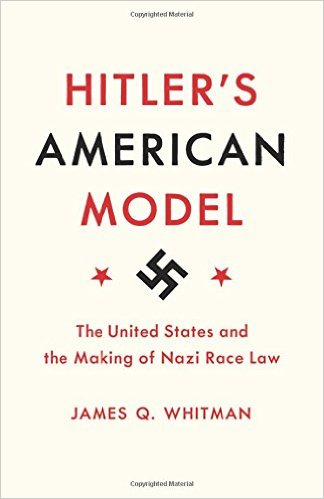
["In the early twentieth century the United States was not just a country with racism,"
writes Yale law professor James Whitman in his book "Hitler's American Model." "It was
the leading racist jurisdiction - so much so that even Nazi Germany looked to America
for inspiration."--Jeff Guo, "The Nazis as students of America's worst racial atrocities,"
washingtonpost.com, May 19, 2017]
[When the American republic slowly came to be relabeled as a "democracy," there were no
significant institutional modifications to justify the change in name. . . . the use of
the term "democracy" to refer to an oligarchic republic simply meant that a different
word was being used to describe the same basic phenomenon.--Gabriel Rockhill, "The U.S. is Not a Democracy, It Never Was," counterpunch.org, December 13,
2017]
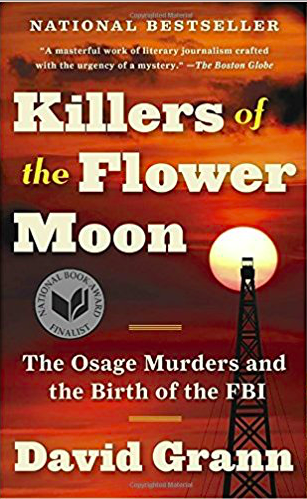
[In 1920s Oklahoma, many members of the oil-wealthy Osage Nation were dying untimely and
suspicious deaths. . . . The author points his investigative lens at the perpetrators of
the murders, reveals cover-ups by authorities all the way up to the national level, and
illustrates that the deception continued almost a century later.--David Grann, "Killers of the
Flower Moon: The Osage Murders and the Birth of the FBI," Vintage; Reprint edition (April 3, 2018)
Daniel Immerwahr, "How to Hide
an Empire: A History of the Greater United States," Picador; Reprint edition
(March 3, 2020)
[In the false history comes strength for the opinion that we Americans and our country
are exceptional and indispensable and that these traits justify Washington's hegemony
over the world. Our destruction in whole or part of seven countries in the 21st
century, our withdrawal from arms limitation agreements, our dangerous demonization of
militarily powerful countries such as Russia and China all rest in our self-righteous
view of ourselves.--Paul Craig Roberts, "Churchill's War: The Real History of World War II,"
paulcraigroberts.org, April 19, 2020]
Martin Jacques, "From Follower To Leader: The Story Of China's Rise", September 21, 2020
[But at the end of the cold war the 'west' began to ignore the actual international law and
to replace it with its own rules which others were then supposed to follow. That hubris has
come back to bite the 'west'. -- The End Of The 'Rules Based International Order',"
moonofalabama.org, September 22, 2020]
[It was created with two key goals in mind: thwarting Soviet expansionism, and
preventing another surprise attack like that carried out by the Japanese on Pearl
Harbour during the second world war. While Moynihan's campaign to shut down the CIA did
not ultimately prevail, there was certainly a widespread perception that the agency was
no longer fit for purpose and should be curtailed.--Rhodri Jeffreys-Jones, "The inside story of the CIA v
Russia - from cold war conspiracy to 'black' propaganda in Ukraine,"
theconversation.com, August 25, 2022]
Yellen's visit to China: Tweedle Dee and Tweedle Dum, CGTN, July 9, 2023

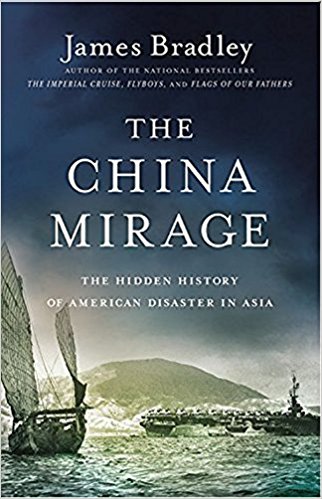 James Bradley, "